Coordinates in the Dark: The Quiet Industry Harvesting Where You Go
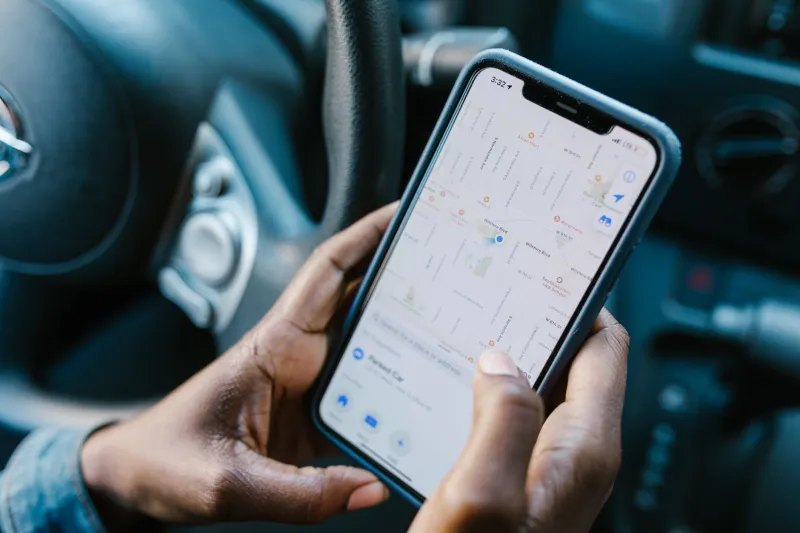
At some point between midnight and morning, while a phone rests on a nightstand in a quiet suburb of Columbus or Sacramento or Memphis, it is still transmitting. Not dramatically. Not with any visible indication. Just a quiet, periodic pulse of coordinates moving outward through a channel most users never agreed to monitor and could not easily locate if they tried.
This is not a story about Google or Apple. Those companies operate in plain sight, their data practices scrutinized by regulators, dissected by journalists, and disclosed — however imperfectly — in privacy policies that at least exist in searchable form. The more consequential story runs underneath that one, through a stratum of smaller actors whose names rarely surface in mainstream coverage and whose data collection practices are, by design, extraordinarily difficult to trace.
The Layer You Were Not Shown
The location data economy in the United States functions across multiple tiers. At the visible layer sit the major platforms. Below that layer operates a parallel infrastructure: weather applications that require precise GPS access to function, retail loyalty programs that track in-store movement via Bluetooth beacons, fitness trackers that log routes and sync to cloud servers operated by companies users have never heard of, and smart home devices that infer location through usage patterns even when GPS is never explicitly invoked.
Each of these services typically discloses some version of data collection within its terms of service. The disclosure, however, is rarely framed in terms of what the data becomes once it leaves the originating application. A free flashlight app that requests location access does not typically explain that the coordinates it gathers may be sold to a data aggregator, packaged with movement histories from thousands of other users, and resold to hedge funds, insurance underwriters, or municipal governments within a matter of weeks.
The vocabulary used to describe this process — "anonymized," "aggregated," "de-identified" — carries a reassuring clinical quality that researchers have spent considerable effort dismining. Studies published by institutions including MIT and Carnegie Mellon have demonstrated repeatedly that so-called anonymized location datasets can be re-identified with high confidence using only a small number of known anchor points. A person's home address and workplace, both of which appear in most movement histories as the two locations where a device spends the most time, are frequently sufficient to reconstruct individual identity from supposedly anonymous records.
What the Coordinates Become
The downstream applications of harvested location data are varied enough to resist easy categorization. Insurance companies have used mobility data to assess behavioral risk profiles. Political campaigns have purchased location histories to identify likely attendees at rival rallies. Landlords have reportedly accessed aggregated foot traffic data to evaluate tenant demographics before signing commercial leases. Law enforcement agencies in multiple states have purchased location data from brokers rather than obtaining warrants, a practice that has drawn legal scrutiny but has not been uniformly prohibited.
For ordinary consumers, none of these transactions are visible. There is no notification, no ledger, no interface through which a person can observe the secondary market for their own movement history. The data moves through channels that are technically disclosed — somewhere in a document that was never read — and practically invisible to everyone except the entities profiting from its circulation.
The Internet of Things has expanded this surface considerably. A smart thermostat that registers when a home is occupied and when it is not is, functionally, a presence-detection device. A connected car that logs trip data to a manufacturer's cloud is generating a movement record. A fitness band that syncs sleep cycles and step counts to a server in another country is transmitting behavioral data whose ownership terms are embedded in an end-user license agreement that almost no one reads in full.
The Watchers Watching the Watchers
In corners of the internet that do not announce themselves, communities of independent researchers have been assembling documentation of this ecosystem for years. These are not uniformly technical communities. Some members are security professionals. Others are privacy advocates, journalists, or simply curious individuals who became unsatisfied with the explanations offered by official sources.
What distinguishes these groups from mainstream privacy discourse is their methodology. Rather than relying on company disclosures or regulatory filings, they conduct their own traffic analysis — intercepting the data their own devices transmit, cataloging the destinations of that data, and cross-referencing findings with public records of corporate ownership and data broker registrations. The results are published in formats ranging from dense technical reports to annotated spreadsheets to plain-language threads on forums that most users will never encounter.
The picture assembled through these efforts is not a conspiracy. It is something more mundane and in some ways more difficult to address: an industry operating largely within legal boundaries, exploiting the gap between what disclosure technically requires and what comprehension actually demands.
Reading the Silence
There is a particular quality to information that is simultaneously public and functionally hidden. The data practices described here are not secret in the strict sense. The companies involved file disclosures, maintain privacy policies, and respond to regulatory inquiries. The architecture of their data collection is not concealed so much as it is rendered illegible — buried in language calibrated to satisfy legal requirements while communicating as little as possible to the person whose movements are being recorded.
For users who wish to reduce their exposure, the practical options are limited but not nonexistent. Revoking location permissions from applications that do not require them for core functionality is a meaningful step. Auditing connected devices for data-sharing agreements, particularly those manufactured by companies with limited US presence, yields useful information. Treating free applications as products with a non-monetary cost — namely, data — reframes the apparent bargain in more accurate terms.
None of these measures address the structural conditions that allow the passive location economy to function. That work belongs to regulatory bodies, legislators, and the sustained pressure of an informed public. The communities documenting these patterns in the margins of the internet are, in a quiet way, contributing to that pressure — transmitting findings through channels that most people will never tune into, but that accumulate, over time, into something that resembles a signal.
The coordinates keep moving. Someone is always listening.