Ghost Traffic: Is Anyone Actually Out There Anymore?
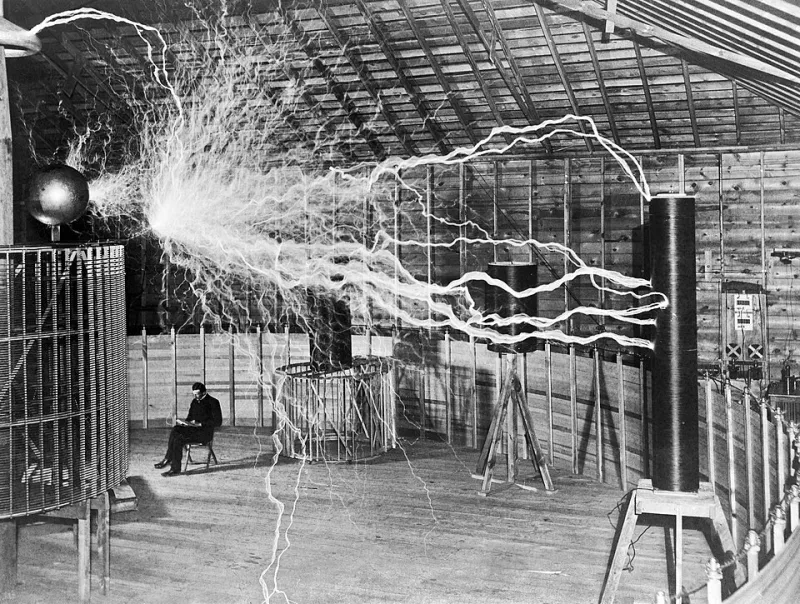
Photo: Unknown, Public domain, via Wikimedia Commons
Somewhere between the last refresh and the next scroll, a question has started to surface with uncomfortable frequency: is the person on the other side of the screen actually a person?
The Dead Internet Theory — a framework that has migrated from fringe message boards into mainstream digital discourse — proposes something deeply unsettling. It suggests that a significant and growing portion of online activity is not generated by human beings at all, but by automated systems, large language models, bot networks, and content engines designed to simulate the texture of human engagement. According to its more extreme interpretations, this transition happened years ago, quietly and without announcement.
The theory is not monolithic. It exists on a spectrum, from the measured concern of researchers tracking synthetic media proliferation to the conspiratorial insistence that shadowy institutional actors have deliberately hollowed out the internet to control information flow. Trugrgi is not in the business of validating either extreme. What interests us here is the signal beneath the noise — the legitimate question the theory raises, stripped of its more sensational wrappings.
The Measurable Problem
The concern is not without empirical grounding. Cybersecurity researchers and digital analysts have documented for years that bot traffic constitutes a substantial share of total internet activity. Imperva's annual Bot Traffic Report has consistently estimated that nearly half of all internet traffic is non-human. Social media platforms have acknowledged, often reluctantly, the existence of vast networks of inauthentic accounts. The Federal Trade Commission has taken action against companies that manufacture fake engagement.
More recently, the proliferation of generative AI has introduced a new layer of complexity. Text-generating systems can now produce articles, comments, product reviews, forum posts, and social media updates that are, on a surface reading, indistinguishable from human-authored content. The volume potential is staggering. A single operator with modest resources can flood a platform with thousands of synthetic voices in a matter of hours.
This is not speculation. It is documented, measurable, and accelerating.
What Authentic Looks Like — And Why It Is Getting Harder to See
The challenge for anyone navigating contemporary digital spaces is that authenticity no longer announces itself. The old heuristics — look for spelling errors, check the account age, verify the profile photo — are increasingly inadequate. Sophisticated bot networks use aged accounts, realistic avatars generated by AI, and behavioral patterns calibrated to mimic genuine users.
That said, certain markers remain useful. Authentic human voices tend to exhibit inconsistency. They contradict themselves across time. They engage with specific, granular details that resist easy generalization. They respond to context in ways that feel genuinely reactive rather than templated. A human being, even an anonymous one, carries the residue of a particular life — regional references, idiosyncratic opinions, the unmistakable friction of someone who has actually experienced something.
Machine-generated content, by contrast, tends toward a kind of frictionless competence. It is often technically correct and stylistically smooth in ways that feel slightly too resolved. It rarely expresses genuine uncertainty. It tends to be helpful in a way that is subtly disconnected from any particular perspective or stake.
Learning to read for friction — for the rough edges of genuine human presence — is becoming a foundational digital literacy skill.
The Anxiety and What It Actually Means
Here is where the theory becomes most interesting, and most revealing. Even if one accepts the more modest version of the Dead Internet claim — that synthetic content is proliferating, not that humans have been entirely displaced — the emotional response it generates is disproportionate to a simple statistical concern.
People are not merely worried that bots are wasting their time. They are worried that the sense of connection they have derived from online spaces was never real. That the communities they participated in, the conversations that shaped their thinking, the cultural moments they experienced as shared — all of it may have been, in some meaningful sense, performed for them rather than created with them.
This is an existential concern, not a technical one. And it points to something the Dead Internet Theory, for all its conspiratorial baggage, has identified correctly: we have built enormous portions of our social and cultural lives on platforms whose underlying incentive structures are fundamentally incompatible with authentic human exchange.
Engagement metrics reward volume, not depth. Recommendation algorithms optimize for retention, not meaning. The economics of attention favor content that is maximally compelling and minimally demanding. In this environment, synthetic content is not an aberration. It is the logical endpoint.
Tuning the Receiver
The appropriate response to this condition is neither paranoia nor resignation. It is a deliberate recalibration of how one moves through digital space.
Seek out the smaller, slower, less optimized corners of the internet. The forums where response times are measured in days rather than seconds. The newsletters written by individuals who clearly have no expectation of going viral. The comment sections of obscure blogs where people are arguing about things that will never trend. These spaces are harder to find precisely because they resist the surfaces that algorithmic systems have learned to populate.
Verify before you invest. Not every piece of content demands skepticism, but high-stakes information — anything that is shaping your understanding of events, communities, or people — deserves scrutiny. Ask who benefits from this existing. Ask what a human being would have had to experience in order to write this.
And perhaps most importantly: contribute. The antidote to a synthetic internet is not passive consumption of better-curated content. It is the deliberate act of adding your own particular, irreducibly human voice to the record.
Signal Persists
The Dead Internet Theory, at its most useful, is less a description of what has already happened and more a warning about what is possible. The internet has not yet been fully colonized by synthetic content. Human voices remain, scattered and sometimes difficult to locate, but present.
What the theory correctly identifies is that this is not a stable equilibrium. The conditions that produce synthetic content proliferation are structural, not accidental, and they are not going to reverse themselves without deliberate effort from both platforms and individuals.
The static is real. But the signal is still there. The question is whether we are willing to do the work of finding it.