Lost on Purpose: In Defense of the Web's Dead Ends

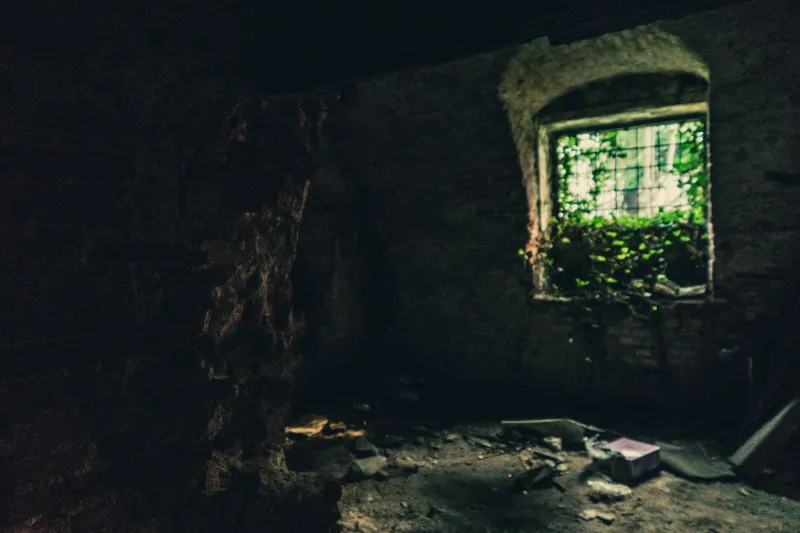
Photo: Warren LeMay from Cincinnati, OH, United States, CC0, via Wikimedia Commons
There was a time — and Americans over forty will remember it — when a browser session could end in a place you could not explain. A fan page for a defunct radio station. A single essay, undated, unsigned, linked from nowhere and to nowhere. You arrived by accident and left without a transaction. Nothing was optimized. Nothing converted.
The modern web has almost entirely eliminated this experience, and it has done so on purpose.
The Tyranny of the Funnel
Contemporary web design treats navigation as a discipline of intent. Every page is a node in a funnel; every link is supposed to move the visitor closer to a goal — a signup, a purchase, a session metric. Pages that do not advance a funnel are treated as defects. Analytics dashboards flag them. Stakeholders ask why they exist.
The result is a network with remarkably few dead ends. Sites interlink internally in dense, deliberate patterns. Outbound links are rare, since they leak attention. Content is built to be found through search and recommendation, which means it is built to match a query — to answer an intent. A page with no intent to serve has no reason to exist.
But something essential lived in those pages that went nowhere.
What Dead Ends Did
The dead end was the web's native form of serendipity. It was where curiosity exhausted itself — not because the trail was finished, but because the trail simply stopped. Standing at one, a reader had two options: retrace their steps or sit with what they had found. Both are, in their way, valuable experiences that the funnel-driven web no longer offers.
More importantly, dead ends implied a web that was not trying to sell you anything. A page that leads nowhere is a page that wants nothing from you. It exists, if it exists at all, for its own sake. That posture — content without a ask — has become so rare that encountering it now feels almost transgressive.
Restlessness as a Virtue
The case for the dead end is ultimately a case about restlessness. The early web rewarded people who wandered without a destination, who followed links out of idle curiosity rather than task completion. Its magic was not in the destinations but in the drift. Purpose, applied at every click, has made the web efficient and, in the same stroke, unmagical.
Restoring the dead end does not require nostalgia or dial-up cosplay. It requires small acts of deliberate inefficiency: linking to things without explaining why. Building pages that are destinations rather than doorways. Writing for the reader who arrives by accident and owes you nothing.
A Modest Proposal
Publishers and independent writers alike might adopt a simple practice: the orphan page. One piece per site, linked from nowhere, indexed by nothing, simply placed on the server like a note tucked into a wall. It will get almost no traffic. That is the point. It is a gesture toward a web where not everything is a funnel, and where getting lost was never a bug.
Signal, the saying goes, is easy to find when everything is a signal. The dead end reminds us what the static was for.