Noise as Oracle: The Online Communities Reading Fortunes in Financial Static
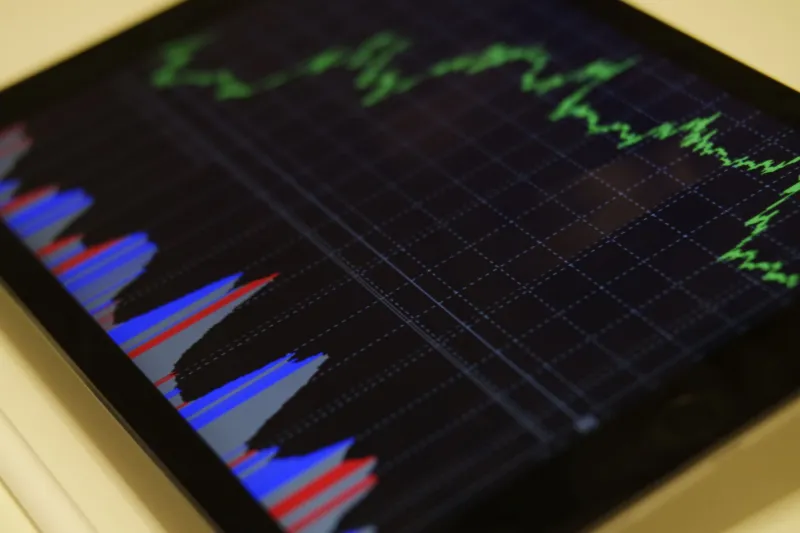
The ticker never sleeps. Across thousands of screens in basement offices and studio apartments, red and green numerals cascade in near-continuous streams — fractions of a cent gained, fractions lost, the aggregate behavior of millions of decisions compressed into a single scrolling line. To most observers, this constitutes noise. To a particular and quietly proliferating subset of online communities, it constitutes something considerably more deliberate.
They call themselves various things — market readers, signal hunters, pattern architects. Their forums are not always easy to locate. Some operate through Discord servers accessible only by invitation. Others publish their findings in long-form posts on platforms that resist algorithmic amplification by design. What unites them is a shared conviction: that the apparent randomness of financial market data is not truly random, and that embedded within its oscillations are patterns legible to those patient enough to learn the grammar.
The Architecture of Belief
It would be tempting to dismiss these communities as fringe curiosities — digital descendants of the astrologers who once charted the movements of celestial bodies in service of earthly prediction. The comparison is not entirely unfair. But it also underestimates the sophistication of the interpretive systems some of these groups have constructed.
Certain communities draw on legitimate technical analysis traditions, applying Fibonacci retracement levels or Elliot Wave theory to price charts in ways that professional traders would recognize, if not always endorse. Others operate in stranger territory — correlating market behavior with geopolitical news cycles, Federal Reserve meeting transcripts, or even the linguistic sentiment patterns extracted from earnings call recordings. A notable few have ventured further still, treating the statistical anomalies embedded in high-frequency trading data as a kind of unintentional Morse code, evidence that the market's structure itself encodes information its architects never intended to transmit.
The question of whether any of this works — in the narrow sense of producing reliable predictive outcomes — is largely beside the point. What these communities have built is not primarily a financial instrument. It is a cosmology.
When the Chart Becomes a Text
Human beings are, at a neurological level, pattern-recognition systems. This capacity served our ancestors well in environments where the rustle of undergrowth genuinely did predict the presence of a predator. In the context of financial markets — systems of almost incomprehensible complexity, shaped by millions of independent actors and susceptible to influence from everything ranging from supply chain disruptions to a single misworded tweet — this same capacity can produce something closer to hallucination.
Researchers studying apophenia, the tendency to perceive meaningful connections between unrelated phenomena, have noted that financial data environments are particularly fertile ground for the condition. The data is abundant, the patterns are partially real (markets do exhibit certain structural regularities), and the stakes feel consequential. These conditions, combined with the social reinforcement dynamics of online communities where members compete to produce the most compelling interpretation, create an environment in which the signal and the noise become genuinely difficult to distinguish.
And yet.
There is a version of this phenomenon that is not straightforwardly delusional. The field of behavioral finance has documented, with considerable rigor, the ways in which market prices are shaped by collective psychological states — by fear, by euphoria, by the herding instincts of institutional investors responding to one another's responses. If sentiment is partially legible, and if sentiment partially determines price, then reading the market as a form of communication is not entirely metaphorical. The chart, in some limited sense, really is a text.
The Community as Interpretive Body
What makes these online gatherings distinctive is less their methodology than their social structure. In traditional financial analysis, interpretation is a largely solitary or institutionally constrained activity. The analyst produces a report; the report travels upward through a hierarchy; the hierarchy acts or does not act. The communities under consideration here operate on a fundamentally different model.
Interpretation is collective, iterative, and frequently contentious. A member posts a chart annotated with their reading. Others respond — affirming, challenging, extending. The conversation that follows resembles nothing so much as a close-reading seminar, with the S&P 500 substituted for the poem. Competing interpretations are weighed not by appeal to authority but by internal coherence, predictive track record, and the persuasiveness of their framing. The community, in aggregate, functions as both author and audience of the market's meaning.
This structure has a notable consequence: it is highly resistant to external falsification. When a predicted movement fails to materialize, the interpretive framework rarely collapses. Instead, it adapts. The signal was there; the timing was miscalculated. The pattern held; an exogenous event disrupted its expression. The interpretive community absorbs disconfirming evidence and continues transmitting.
Signal, Static, and the Persistence of Meaning
There is something worth taking seriously in the phenomenon these communities represent, independent of whether their specific predictions prove accurate. Financial markets have become, in the twenty-first century, among the most consequential information environments in human civilization. The data they generate is staggering in volume, partially public, and deeply entangled with the material conditions of everyday life — the mortgage rate, the retirement account balance, the price of groceries shaped by commodity futures.
That ordinary people, excluded from the interpretive institutions that have traditionally mediated this data, are developing their own frameworks for making sense of it is neither surprising nor entirely troubling. It reflects a broader pattern visible across digital culture: the democratization of interpretation, with all of the possibilities and pathologies that entails.
The bandwidth prophets — to borrow the informal designation some communities have adopted for their most respected members — may or may not be reading genuine signal from the market's static. The more interesting question is what it means that so many people feel compelled to try. In an economic environment characterized by opacity, volatility, and the persistent sense that the system's logic is available only to insiders, the search for hidden patterns is not merely an intellectual exercise. It is an act of refusal — a rejection of the proposition that the noise is simply noise, and that those without institutional access must simply endure it.
Whether the oracle speaks or not, the act of listening is its own kind of transmission.