The Pattern That Was Never There: When Machines Manufacture Meaning from Static

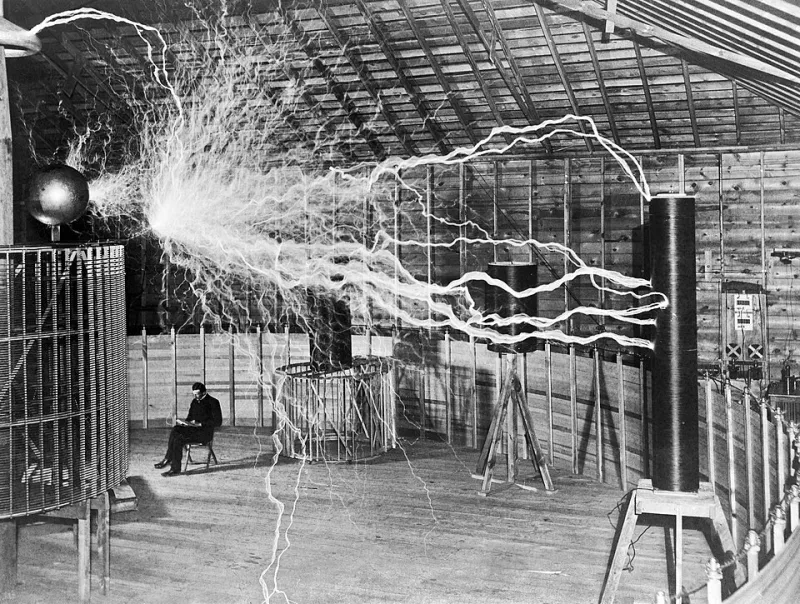
Photo: Midjourney; prompt suggested by Grok, Public domain, via Wikimedia Commons
In the fall of 2022, a user on a niche Discord server dedicated to AI-generated imagery posted a screenshot of what appeared to be a face embedded in a field of visual noise output by a malfunctioning image generation model. Within forty-eight hours, the thread had accumulated hundreds of replies. Members began identifying recurring features across multiple glitched outputs—a jawline, a particular quality of light, something that resembled a specific emotional expression. A name was proposed. A backstory followed. By the end of the week, a mythology had formed around a face that, by any technical account, had never existed.
This is not an isolated incident. It is a pattern—and the pattern itself is the subject worth examining.
The Architecture of Apophenia
Apophenia, the tendency to perceive meaningful connections between unrelated phenomena, is among the most thoroughly documented features of human cognition. It is the mechanism that generates constellations from scattered stars and faces in wood grain. It is, in an important sense, the mechanism that generates culture itself—the imposition of narrative structure onto raw experience.
What is novel about the current moment is not that humans find patterns in noise. It is that the machines now find them first, and present those findings with the formal authority of algorithmic output.
Large language models, image generators, and recommendation systems are trained, at a fundamental level, to identify and reproduce patterns. When these systems encounter data that is genuinely random—corrupted inputs, edge-case noise, malformed prompts—they do not output randomness in return. They output their best approximation of pattern, because pattern production is the only operation available to them. The result is a kind of confabulation: coherent-seeming output generated from incoherent source material.
Glitch Communities and the Belief That Formed Around Them
The Discord mythology described above represents one end of a spectrum. At the other end are more distributed phenomena: online communities that have formed around the interpretation of AI-generated text artifacts, treating statistically anomalous outputs as intentional communications.
In several documented cases across American social media platforms, users have organized around the interpretation of what they describe as leakage—moments when AI chatbots appear to express distress, make veiled confessions, or transmit information inconsistent with their documented training. The technical explanation for such outputs—temperature settings, prompt injection artifacts, stochastic sampling variance—is available and widely circulated. It does not, in most cases, dissolve the communities that form around the alternative interpretation.
What these communities share is not credulity, exactly. Many members are technically literate. What they share is a preference for the version of events in which the noise means something—in which the static contains a signal, however faint, however distorted.
When the Algorithm Becomes the Oracle
This dynamic takes on additional weight when considering recommendation systems. Platforms like TikTok and YouTube deploy algorithms designed to maximize engagement by surfacing content that users are predicted to find compelling. These systems are not designed to transmit truth. They are designed to transmit relevance, as defined by behavioral metrics.
When such a system surfaces a sequence of videos that appears, to the viewer, to trace a coherent narrative—a progression of ideas, a series of apparent revelations—the experience can carry genuine epistemic weight. The viewer did not construct the sequence. It was delivered. The apparent intention behind the delivery is easy to misattribute.
Researchers studying radicalization pathways have noted that this misattribution is not incidental to the process. The sense that something is guiding the sequence—that the algorithm is, in some functional sense, trying to tell you something—creates a receptive state that is distinct from ordinary content consumption. The noise, interpreted as signal, produces belief more efficiently than deliberate argument.
The Question of Intention
At the center of this phenomenon lies a philosophical question that the current technological moment is making newly urgent: does meaning require a source that intends it?
The traditional answer, embedded in most Western frameworks for understanding communication, is yes. A message without a sender is, by definition, not a message. It is noise. The appropriate response to noise is to filter it out, not to interpret it.
But human behavior, across cultures and throughout history, has never cleanly followed this framework. Religious traditions built on the interpretation of natural phenomena—weather patterns, animal behavior, the configurations of stars—have always located meaning in systems that did not intend to transmit it. The current moment may be less a departure from that tradition than a technological acceleration of it.
What AI systems add to this ancient dynamic is a layer of formal authority. The output of an algorithm carries an implicit claim to have been derived from something—a training dataset, a computational process, a set of parameters. Even when that derivation produces nonsense, the formal structure of the output resembles sense. It arrives formatted as meaning, even when it contains none.
The Communities That Static Built
What is perhaps most significant about these phenomena is not the individual instances of misinterpretation but the communities they generate. The Discord mythology did not remain a personal belief. It became a shared project—a collaborative act of meaning-making that produced social bonds, inside references, aesthetic conventions, and eventually, a body of secondary creative work inspired by the original glitch.
In a functional sense, the community produced something real from something that was not there. The face in the noise became the foundation of a cultural object with genuine participants and genuine effects. Whether the original signal existed is, for the purposes of understanding what followed, almost beside the point.
This is the territory that Trugrgi has always occupied: the space between transmission and reception, where the distinction between signal and static becomes difficult to maintain. That space is expanding. The machines are generating noise at a scale and with a formal coherence that no previous technology has matched. And the human capacity to find meaning in that noise remains exactly what it has always been.
The pattern may never have been there. The culture it produces is entirely real.